🗺️ Kingdoms of Mythic Greece
The Homeric realms of the Trojan War era from the Iliad's catalogue of ships
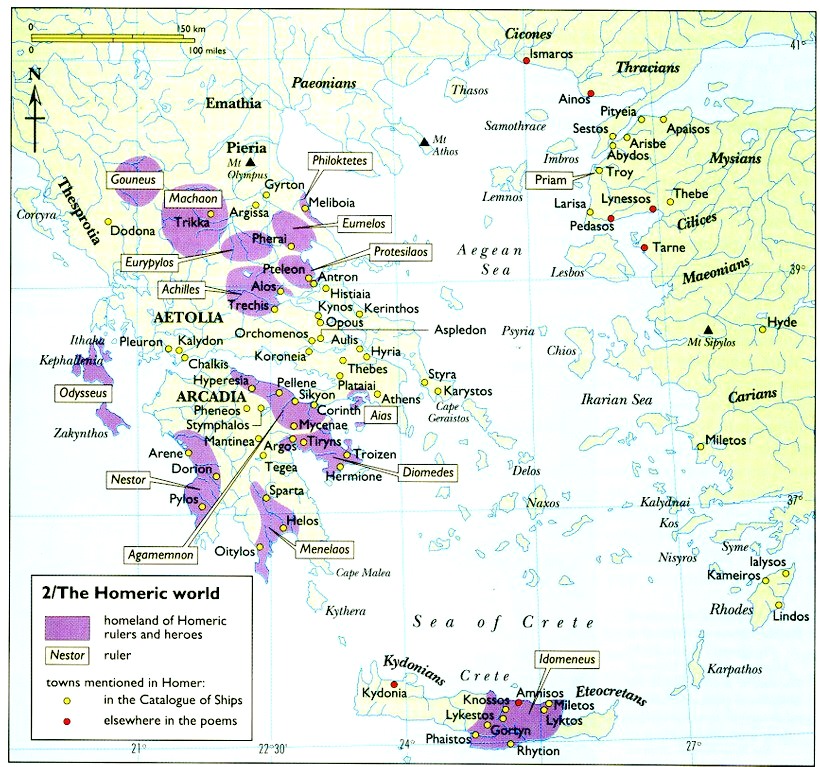
Based on Homer's Iliad Book - Catalogue of Ships
The Political Geography of Homeric Greece
Welcome to the definitive guide to the kingdoms of mythic Greece—the political landscape that shaped the Trojan War narrative. These Bronze Age realms represent the complex tapestry of alliances, rivalries, and cultural identities that defined late Mycenaean civilization.
The Catalogue of Ships: Homer's Iliad provides our primary source for understanding the political organization of Greece around 1200 BCE. Book 2's famous catalogue lists 29 contingents from mainland Greece and the Aegean islands, totaling 1,186 ships and an estimated army of over 100,000 men. This detailed inventory reveals the sophisticated political geography of Late Bronze Age Greece.
Mycenaean Civilization: These kingdoms were not mere mythological constructs but reflections of actual Late Helladic IIIB political entities. Archaeological evidence from palace centers like Mycenae, Pylos, and Thebes confirms the existence of complex bureaucracies, extensive trade networks, and monumental architecture that correlate with Homeric descriptions.
Historical Legacy: The Homeric kingdoms represent the twilight of Mycenaean civilization. Their detailed listing in the Iliad preserves historical memory of political structures that would soon collapse in the Late Bronze Age collapse (c. 1200-1150 BCE), yet their cultural legacy would shape Classical Greek identity for centuries to come.
Loading Kingdoms database...
Archaeological Correlations with Homeric Kingdoms
Mycenae: The archaeological site of Mycenae correlates with Homer's "strong-founded citadel" of Agamemnon. The Lion Gate, Grave Circle A, and palace ruins confirm its status as a major Bronze Age power center.
Pylos: The Palace of Nestor at Pylos (discovered in 1939) revealed Linear B tablets documenting a complex administration matching Homer's description of Nestor's wise governance.
Thebes: Excavations at Thebes have uncovered palace remains and Linear B tablets confirming its importance as a major Mycenaean center, though its role in the Trojan War is minimized in Homer due to Theban Cycle traditions.
Ithaca: While traditional identifications are debated, recent archaeology on Cephalonia supports the identification of Homeric Ithaca with the Paliki peninsula.